
Role
User Research
Product Strategy
UI Design
Usability Testing
Tools
Figjam
Confluence
Figma
Notion (for notes)
⚠ Disclaimer
EY work is covered by an NDA — these case studies focus on the research approach, design decisions, and impact rather than on final deliverables.
CommodiTrade
EY's commodities trading clients operate across complex, multi-jurisdictional tax environments where a single trade can trigger significant regulatory and financial risk. Before CommodiTrade, traders relied on email chains and manual back-and-forth with tax teams to get approval before executing trades — a slow, inconsistent process with no reliable audit trail.
The client came to EY with a clear vision: rebuild their existing internal tool as a platform-native product within Beehive. They knew what they needed. My role was to take their requirements and translate them into a coherent, usable interface — one that felt familiar enough to experienced traders that adoption wouldn't be disrupted, while being modern enough to meet the standards of the Beehive platform.
Goals & Objectives
Enable real-time tax validation of commodity trades based on pre-defined logic (tax rules).
Allow traders to submit structured requests when logic is unclear or absent (raise a query).
Capture decisions and rationales for future reuse and audit (audit log).
Reduce repeat queries through structured guidance reuse (tax rules).
Support onboarding and advisory service delivery.
Design Approach
Because this was a client-directed redesign rather than a discovery-led project, the design challenge wasn't about defining what to build — it was about how to build it well within defined constraints.
The existing tool had established workflows that traders relied on daily. Changing too much risked confusion and resistance from users already under time pressure. My approach was to preserve the core mental models — how traders validated a trade, raised a query, or checked a rule — while rethinking the visual hierarchy, information density, and interaction patterns to reduce friction and bring the tool in line with Beehive's design system.
Key decisions included how to surface risk ratings clearly without overwhelming the trade list view, how to structure the Tax Rules interface so that filtering across jurisdictions and commodity types feels intuitive, and how to design the query flow to route complex scenarios efficiently between the trader and the tax team without losing context along the way.
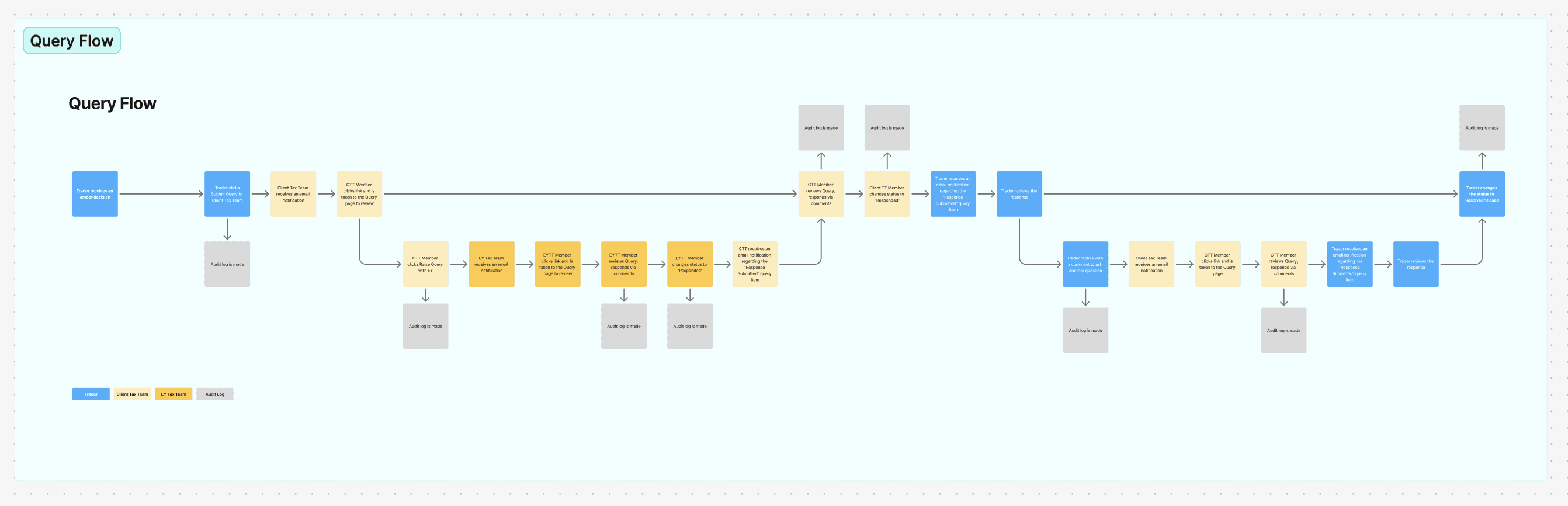
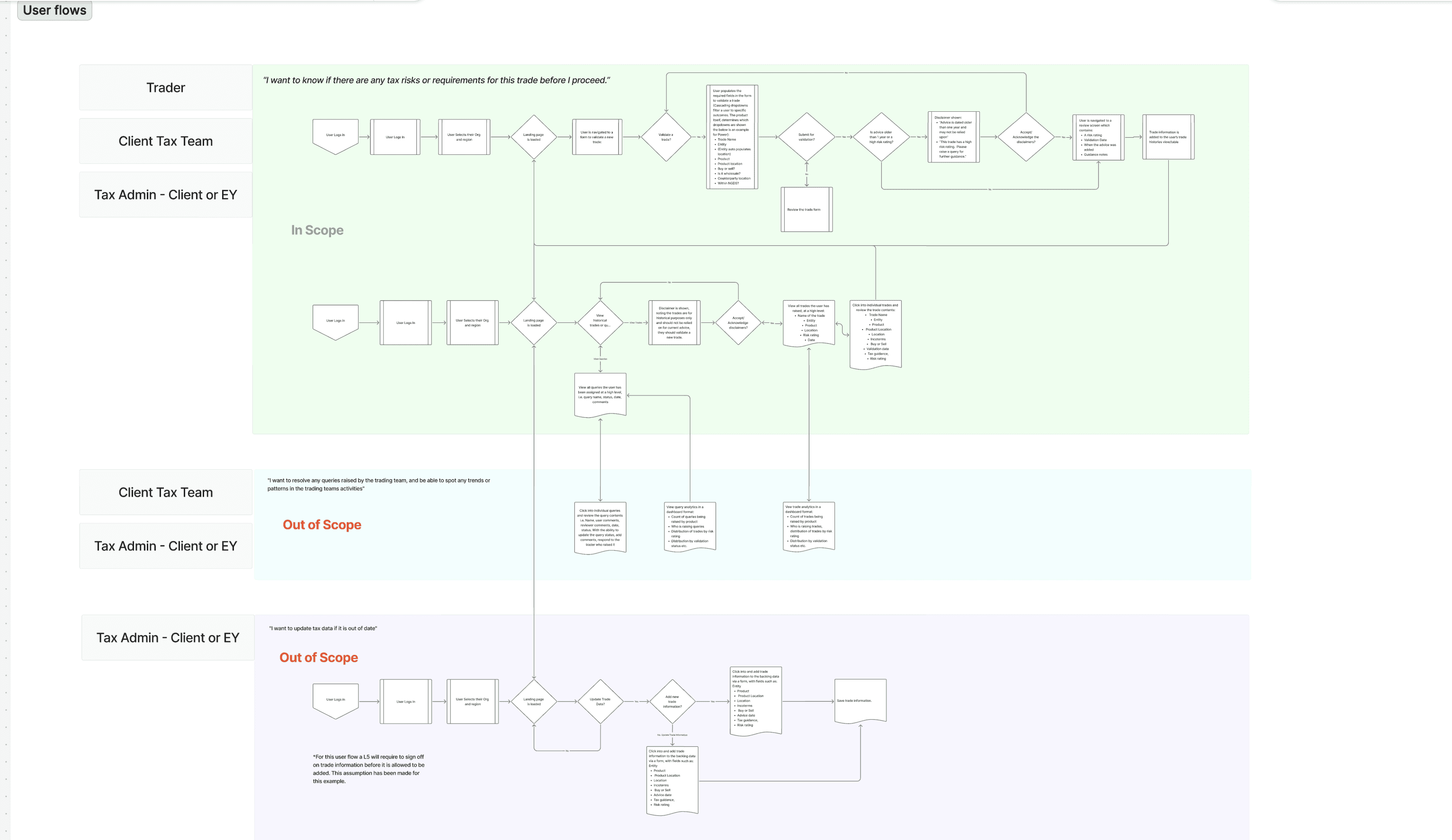
Initial Prototypes
Working from the client's requirements, I developed initial prototypes to establish the core interface patterns and validate the design direction with the team.
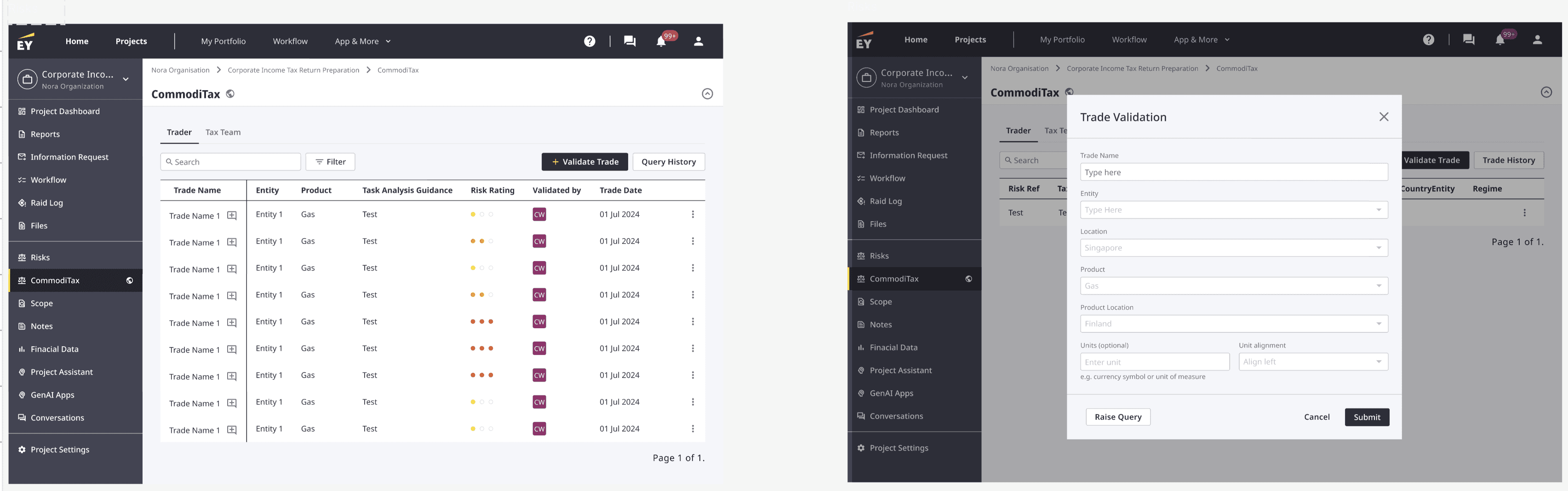
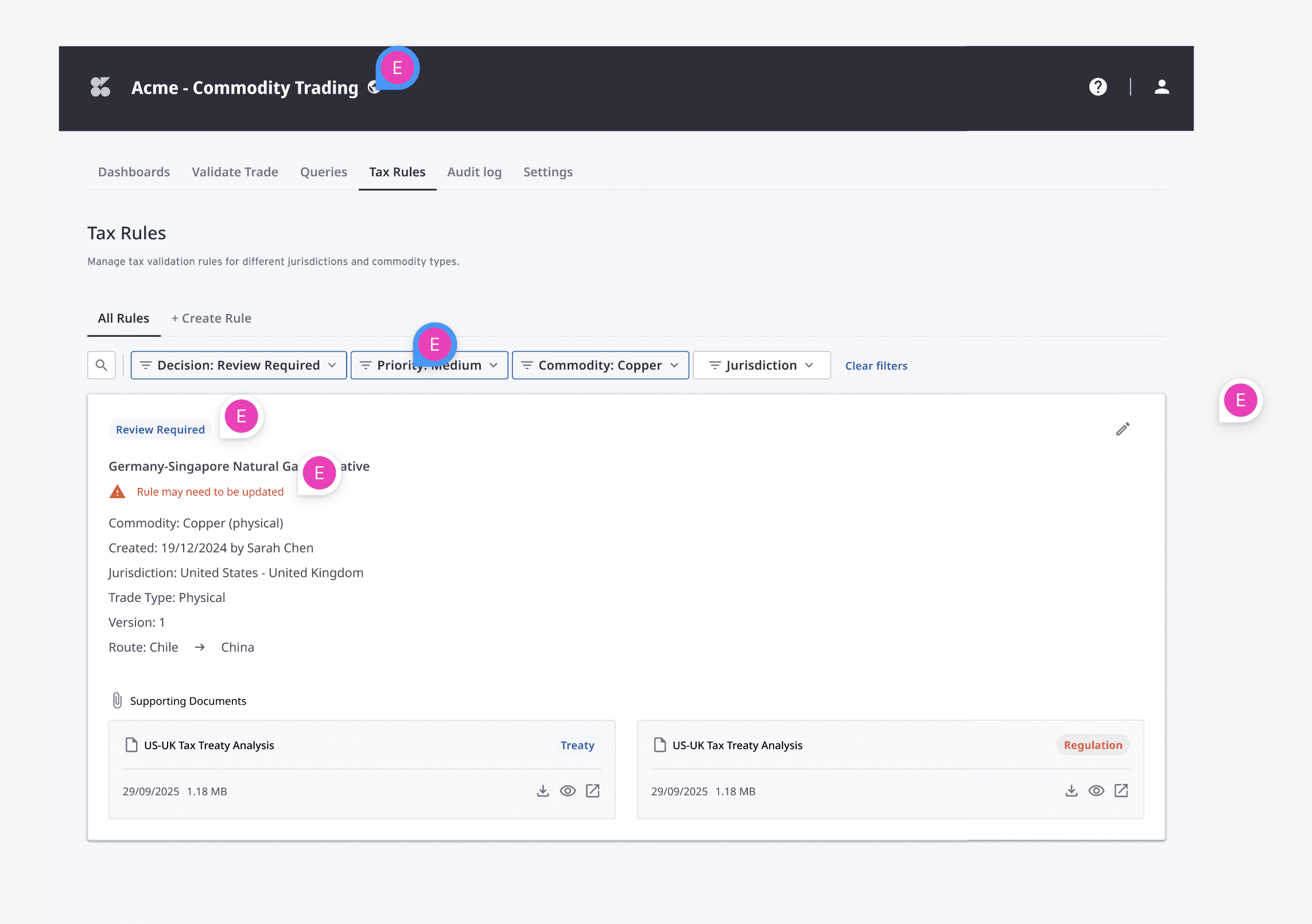
Where we are now
CommodiTrade is now live within the Beehive platform, used by commodity trading clients to validate trades, manage tax rules, and maintain a full audit log of decisions across jurisdictions. The redesign successfully brought a previously manual, email-dependent process into a structured platform-native tool — reducing turnaround time for trade approvals and giving tax teams a consistent, auditable record of every decision made.